Monday - Saturday
10 a.m. - 5 p.m.

 Burano Laundry Soap
Loofah or Luffa? What It Really Is and How to Use It
What is a loofah? (Vegetable, Animal, or Synthetic?)
It can certainly be confusing. Loofah or luffa? Is it a plant, animal, or simply a wad of plastic gauze?
First, we're not talking about those cheesy, microplastic-shedding mesh balls that trap dead skin cells and retain moisture. Dermatologists say they're breeding grounds for bacteria, mold, and yeast.
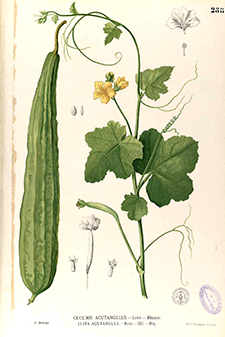
We sing the praises of the natural ones. Many people think luffas are some kind of sea creature, and indeed they're called sponges. Scientifically, luffas are vegetables, the fruit of a vine in the cucumber and gourd family.
People eat them when they're about the size of a cucumber, still young and tender. Sometimes called Chinese okra, they taste mild and slightly sweet, similar to a blend of zucchini and okra.
Bathers, cooks, and housekeepers would call it a “loofah.” Botanists and gardeners call it a “luffa.”
Luffa vs. Loofah: Which is Correct?
From a marketing standpoint, I might have been wrong to spell the luffas we use in our soaps “luffa” instead of the more common “loofah,” but I went with the plant's scientific name, Luffa.
Luffa is the genus. We use the species Luffa aegyptiaca.
Luffa acutangula is the more widely eaten species. It also grows large and fibrous and serves many of the same purposes as L. aegyptiaca. However, L. acutangula has a coarser texture than L. aegyptiaca, even when wet. For bathers, it’s too rough for anything but your heels.
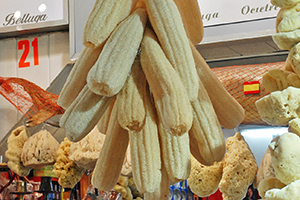
You probably guessed that L. aegyptiaca has something to do with Egypt. It does. They’ve been growing there since Cleopatra’s time. The ones we get grow in the Nile Delta, where the climate produces huge specimens that look like pudgy baseball bats.
From Vine to Your Shower
When the green gourd matures, they harvest it and dry it in the sun. The skin becomes brittle and is removed. The seeds are shaken out. What’s left is the fibrous cylinder, useful for bathing and many other cleaning jobs.
When it gets wet, a luffa softens and becomes pliant. The texture is perfect for gentle scrubbing, soft enough to wash your face.
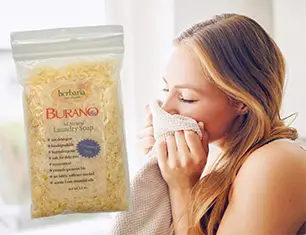
Bathing is its main use, but luffas do much more. I use pieces to clean non-stick pans without damaging the surface. Food particles wash out of it readily. I wash my car with a luffa and Burano. I once gave a whole luffa to a bakery, and the boss said it lasted a year, more durable than commercial scrubbers.
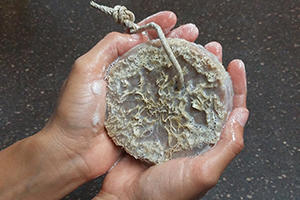
I use a Luffa Soap every day in the shower. It gently washes away dead skin and helps to prevent clogged pores, acne, and blackheads. Scrubbing with the bar stimulates blood flow and encourages healthy skin cell renewal.
To make our Luffa Soaps, we place a whole luffa down a tube, then pour our soap into the mold while it’s still liquid. After the soap hardens and cures, we slice the cylinder into thick rounds. We add a hemp rope to each bar so you can hang it up and let it dry between uses. These may be the most deluxe soaps ever!
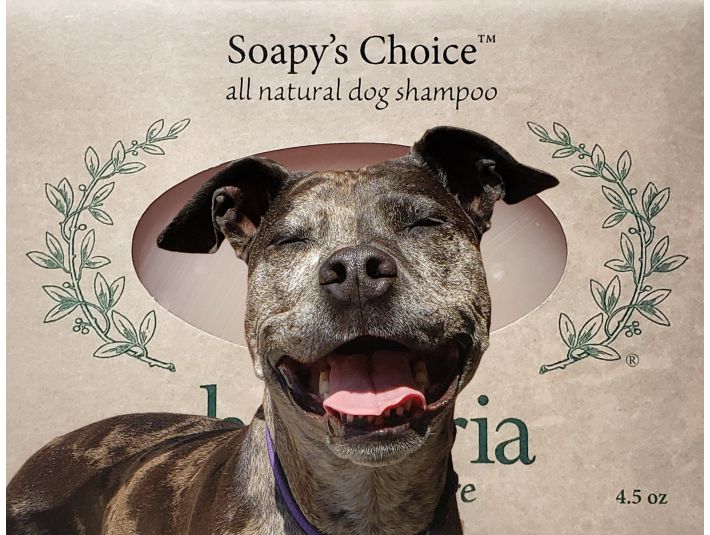
We offer seven scent varieties of Luffa Soaps—Biotherapy Black, Camper’s Choice, Chai Spice, French Lavender, May Chang, Soapy’s Choice, and Triple Mint. Today I’m using Soapy’s Choice. I like the scent. It’s not just for dogs.
Ways to Use Natural Luffa at Home
We also sell pieces and whole luffas. Every home should keep one for cleaning. To mop and scrub our kitchen floor, I put rounds under my Crocs and skate around with soap and water.
To make flat luffa pieces, use scissors to cut out the center core, leaving the outer layer. This makes quick-drying washcloths and handy scrubbers.
Luffa's open fibers let it dry out between uses. I’ve never seen mold on ones I have used.
Traditional commercial kitchen sponges are made from wood-pulp cellulose and cotton, or synthetic polyesters. They hold up five weeks at best.
Luffas are strong and hold up well. They’re sustainable and biodegradable. It’s what Herbaria is all about. We’re proud to offer plant-based products that are better for us and the planet.
No posts found
Write a reviewRecent posts
- Loofah or Luffa? What It Really Is and How to Use It
- Dog N Suds
- As the Saying Goes
- The Herbaria Origin Story
- Citrus, My Main Squeeze
- Shave! How to Get a Cleaner, More Comfortable Shave
- The Wonderful World of Natural Scents
- Soap vs. Detergent
- The Benefits of Old Fashioned Lye Soap: Back to Basic Goodness
- How and Why to Repel Insects Naturally
- The Joy of Natural Shampoo Bars: Why Make the Switch?
- Persimmon Soap and “Old Person Smell”