Monday - Saturday
10 a.m. - 5 p.m.

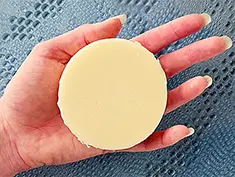
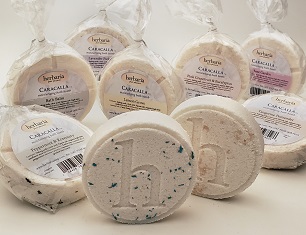
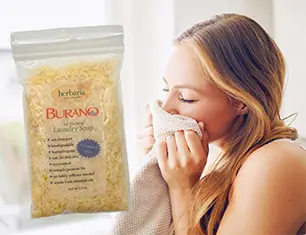 Burano Laundry Soap
Soap vs. Detergent
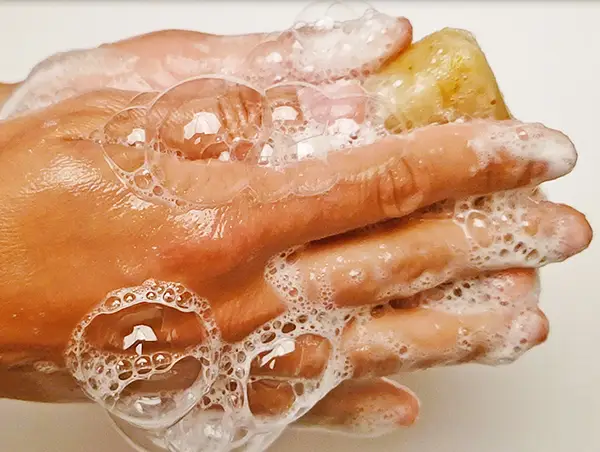
There's a world of difference between detergent and real soap.
What’s the Distinction?
Most people call a bar of Dove, “soap,” but in fact, its real name is Dove Beauty Bar. The bar with “1/4 cleansing cream.” Its main ingredient is a synthetic detergent.
There's a funny story about the advertising firm that was charged with promoting Dove. The famous Madison Avenue art director, David Ogilvy, reportedly asked his client, “I understand about 75% of the ingredients, but what are the rest?”
“You don't want to know,” the client responded.
“Well, then, let's just call it cleansing cream.” That's how Dove is 1/4 cleansing cream. Pure Marketing jargon.
If you're reading this, you're probably already hip to this, but companies just want to sell you stuff.
Commercial soaps and body washes are almost all detergents. It’s in toothpaste, too.
When Were Detergents First Made?
Chemists concocted detergents around World War I, when fats were scarce and real soap was hard to make. They figured out how to make a surfactant out of petroleum products. It was cheaper to make than real soap.
What’s a Surfactant?
Detergents and soap are both surfactants. The molecules have one end that binds to water and another that binds to oils and dirt. If you try to wash butter off your hands without soap, the water will just run off your hands. Surfactants mix oils and water so dirt and germs can be washed down the drain.
Do You Have Hard Water?
Detergent is supposed to fare better in hard water. From our experience in St. Louis—where the water is considered hard—we haven’t had any issues with our bars.
While soap can leave what’s unpleasantly called scum, detergents can leave residue. Either way, would you choose the one who leaves the bathroom a bit cleaner or the one that’s clearly better for your skin? Of course, in either case, you need to wash the tub after a bath and clean the shower occasionally.
What is in Detergents?
Detergents are scary with their colorants, preservatives, synthetic fragrances, and more.
Read this long and unreadable list of ingredients in a bar of Dove:
Sodium Lauroyl Isethionate, Stearic Acid, Lauric Acid, Sodium Oleate, Water (Aqua), Sodium Isethionate, Sodium Stearate, Cocamidopropyl Betaine, Fragrance (Parfum), Sodium Laurate, Tetrasodium Etidronate, Tetrasodium EDTA, Sodium Chloride, Alpha-Isomethyl Ionone, Citronellol, Hexyl Cinnamal, Linalool, Titanium Dioxide.
Your skin is porous. How do you feel about these chemicals getting into your body? Kind of creepy. If you’re wondering what EDTA is, it’s ethylenediaminetetraacetic acid.
Why Choose Herbaria Soaps?
Herbaria soaps lather and clean well. They rinse off readily. They don't strip your skin of its protective biome.
Compare Dove’s ingredients with a bar of Herbaria soap, Lavender Oatmeal, for instance, our number one seller:
Saponified food-grade olive oil, rice bran oil, palm kernel oil, and soy oil; glycerin, lavender essential oil, oatmeal, and shea butter. That’s it.
Lye is used to turn the oils into soap. It’s not listed in the ingredients because all the lye is entirely used up in the chemical reaction. There’s none left.
If you're interested, the lye is called sodium hydroxide. It’s a strong base. When combined with fatty acids (vegetable oils), the base and acid neutralize to form a salt called soap. The triglycerides turn to stearates, and as a by-product, glycerin is produced.
About 9% of every bar is glycerin, prized as a humectant. Humectants attract moisture from the air. They soften and strengthen skin. It’s so good, chemists extract glycerin from soap to use in cosmetics as a moisturizer in lotions and conditioners. It remains in our bars.
Since we are talking about Lavender Oatmeal, oatmeal is included, just like you had for breakfast, except here it's working externally instead of internally. Oatmeal provides not just exfoliation, removing dead skin cells, but also brings colloidal soothing to the skin. If you've ever had measles, you might have taken an oatmeal bath to soothe the rash.
Lavender Oatmeal also contains lavender essential oil, not only for its scent, but for its relaxing aromatherapy. Plus, it’s good for the skin.
One more thing. In Lavender Oatmeal and in almost all of the bars we produce, we add an extra moisturizer to further pamper skin. In Lavender Oatmeal, it's shea butter. We love shea butter! Other extra-added emolients we use are hemp seed oil, avocado oil, jojoba oil, sweet almond oil, neem oil, cocoa butter, and coconut oil.
One Natural Cleaner for Everything: From Skincare to Kitchen Counters
You will find that it is absolutely astonishing how much soap cleans. True Herbaria fanatics wash their dishes and laundry with our soap. They like the peace of mind that comes from not bringing unnecessary chemicals into their home.
In truth, soap cleans more than the face, body, dishes, and laundry. You don't need a special cleaner for vegetables, countertops, stainless steel, floors, or cars. Keep it simple.
How Long Have People Used Soap?
Early soap likely began as an accidental discovery tied to ritual practices. Historical accounts—often linked to places like ancient Mesopotamia—suggest that when animal fats from sacrifices mixed with wood ashes (which contain alkaline substances), they formed a crude cleansing material. This process is essentially an early version of what we now call saponification.
The resulting substance could break down grease and dirt, making it useful for cleaning textiles, tools, and leather. However, it was quite harsh because the proportions were uncontrolled and the mixture contained strong alkalis. That’s why it wasn’t typically used on skin. Over time, people refined the process—adjusting the balance of fats and alkaline materials—and soap gradually became gentler and suitable for personal hygiene.
Herbaria’s formula dates back to 2002, when LaRee DeFreece formulated our first bars. Friends and family declared the soaps “the best ever.” Thousands of our customers agree.
Our soaps are used in every state in the US and many countries. Aren’t you glad you use Herbaria? Don’t you wish everybody did?
No posts found
Write a reviewRecent posts
- Dog N Suds
- As the Saying Goes
- The Herbaria Origin Story
- Citrus, My Main Squeeze
- Shave! How to Get a Cleaner, More Comfortable Shave
- The Wonderful World of Natural Scents
- Soap vs. Detergent
- The Benefits of Old Fashioned Lye Soap: Back to Basic Goodness
- How and Why to Repel Insects Naturally
- The Joy of Natural Shampoo Bars: Why Make the Switch?
- Persimmon Soap and “Old Person Smell”